Top 5 Hybrid Digital Pianos for Professional Pianists in 2024

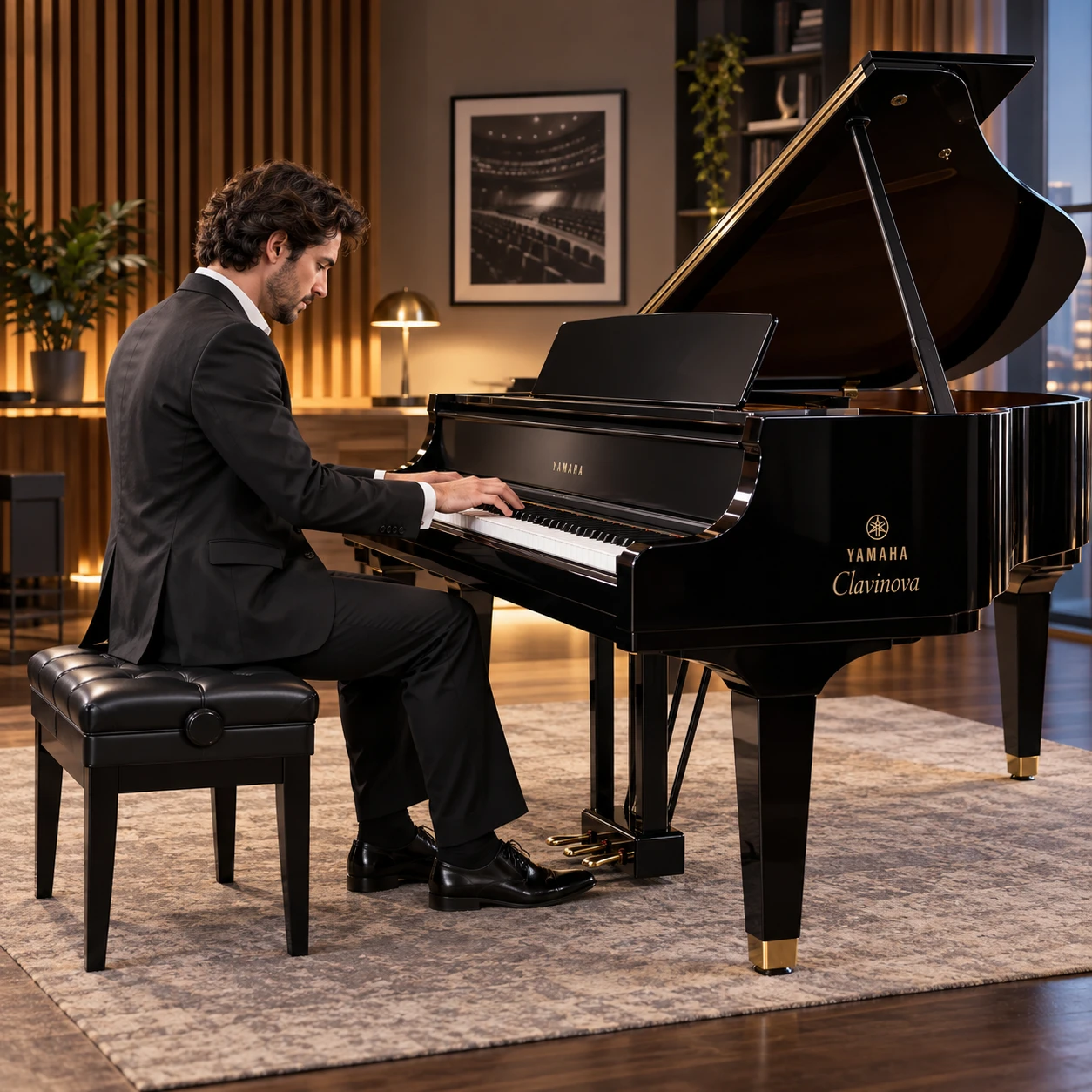
A hybrid digital piano aims to bridge two playing worlds: the physical response of an acoustic piano and the control, consistency, and convenience of digital sound. For professional pianists, that can mean a more substantial piano action for daily practice, plus headphones, recording, and sound choices that an acoustic instrument cannot provide on its own.
There is no single best model for every performer. The five options below represent distinct approaches available in 2024, from compact instruments with real piano actions to cabinet pianos with acoustic resonance systems. Confirm current specifications and regional availability before buying, since model ranges and configurations can vary by market.
What Makes a Digital Piano “Hybrid”?
A hybrid digital piano combines digital sound generation with at least one major acoustic-piano component, such as a real piano action or a physical soundboard and resonance system. It differs from a conventional digital piano, which typically uses a simulated weighted-key action and speakers without those acoustic mechanisms.
Hybrid designs are not all built alike. Some models use an acoustic grand piano action, with hammers and mechanical parts moving under the keys, while sensors trigger a sampled or modeled grand piano sound engine. Others add a soundboard or resonance system that physically moves air and makes the sound feel less like it is coming only from speakers.
That combination can deliver precise control over repetition, dynamics, and key return. It also comes with compromises: hybrids are usually heavier and more expensive than portable digital pianos, and a soundboard system may project sound into a room even when headphones are connected. A hybrid is best understood as a design category, not a guarantee that every instrument will feel or sound exactly like a particular acoustic grand.
How We Compare Hybrid Pianos for Professional Use
Professional suitability depends on how well a piano supports a player’s repertoire, touch, and working environment. We compare the five options by action, tonal response, pedal behavior, useful performance features, and whether the instrument fits a home studio, teaching room, or stage setup.
The first test is the acoustic piano action: can you shape quiet phrases, repeat notes reliably, and control fast passagework? Next, listen for a convincing range of tone and dynamics from pianissimo to forte. A grand piano sound engine may use samples, modeling, or a combination; the label matters less than whether the response feels expressive under your hands.
Also assess pedal response, including half-pedaling where supported, and check polyphony for sustained passages with the damper pedal. For studio work, consider USB or MIDI connectivity, audio outputs, headphone options, and recording functions. These features matter differently to a concert performer who needs amplification than to a pianist who mainly practices at home. Our shortlist favors well-established hybrid lines and distinct professional use cases rather than claiming a universal performance ranking.
Top 5 Hybrid Digital Pianos for Professional Pianists
These five models stand out for professional use because each pairs digital sound and practical features with a notable acoustic-style action, resonance design, or both. Their differences are more useful than a strict first-to-fifth ranking.
1. Yamaha AvantGrand N3X
The Yamaha AvantGrand N3X is a high-end option for pianists who want a grand-style playing position and a real grand piano action in a digital instrument. Its acoustic grand action works with Yamaha’s digital sound system, while the instrument’s speaker setup helps create an immersive sound field.
Best for: serious home practice, studios, and players who value grand-piano geometry and nuanced control. The N3X offers a substantial experience, but its size and premium price make it a difficult fit for small rooms or frequent transport. Check the available connections and recording workflow against your studio needs rather than assuming a luxury cabinet includes every stage feature.
2. Yamaha AvantGrand N1X
The AvantGrand N1X brings Yamaha’s grand action approach into a more compact cabinet than the N3X. It can suit a pianist who wants an expressive, grand-like action for regular practice but does not have room for a larger instrument.
Best for: apartment-sized music rooms, teaching studios, and home practice where touch is the priority. Its smaller footprint still requires dedicated space, and it is not a lightweight stage piano. Compare its sound projection and connectivity with your setup, especially if you plan to record directly or perform through external amplification.
3. Yamaha AvantGrand NU1XA
The Yamaha AvantGrand NU1XA uses an upright-style acoustic piano action, giving it a different physical response from the AvantGrand models built around grand actions. For pianists accustomed to upright instruments, that distinction can make the transition feel more familiar.
Best for: players who prefer an upright touch, home studios, and practice rooms where a traditional upright cabinet suits the space. The action type is a genuine point of difference, not a lower or higher grade of piano. If your work depends on grand-piano repetition and key response, audition it alongside a grand-action hybrid before deciding.
4. Kawai Novus NV10S
The Kawai Novus NV10S combines a Millennium III hybrid upright action with a digital sound engine and a soundboard-based speaker system. Its design targets pianists who want the movement of a mechanical action and room-filling acoustic-style projection without a conventional acoustic piano’s sound production.
Best for: advanced practice and performance at home, particularly for players drawn to Kawai’s action feel and a more physical room sound. The cabinet and mechanical components add weight and cost, and the resonance system may be less suitable when near-silent headphone practice is essential. Try it at both low and high volume, not only through headphones.
5. Kawai Novus NV5S
The Kawai Novus NV5S offers a hybrid upright action in a more traditional upright-style format. It pairs that action with digital piano sounds and an acoustic resonance system, making it a practical candidate for pianists who want a familiar upright footprint with digital flexibility.
Best for: upright-piano players, teaching spaces, and home practice where a cabinet instrument is preferred. It can be a strong compromise between acoustic-style touch and digital convenience, but it still occupies more space than a portable digital piano. Check that its speaker projection and headphone behavior suit shared walls or quiet practice hours.
How the Five Options Compare
The main difference among these hybrid pianos is the physical action and sound projection: Yamaha’s AvantGrand range offers grand- or upright-style actions, while Kawai’s Novus models combine upright actions with soundboard resonance. That distinction should guide auditions before secondary features.
- For grand-action feel: compare the Yamaha N3X and N1X. The N3X provides a larger grand-style format; the N1X is the more compact alternative.
- For upright-action familiarity: audition the Yamaha NU1XA and Kawai NV5S. They take different design approaches, so the pianist’s preferred touch should decide.
- For soundboard resonance: consider the Kawai NV10S and NV5S, then judge how their room projection works in your practice environment.
- For recording or live use: verify the exact model’s outputs, USB or MIDI options, and available sound controls. A hybrid cabinet piano may be less convenient on stage than a portable digital piano even when its action is excellent.
Polyphony, pedal response, and sound quality should be tested in context. Play sustained chords with the pedal down, repeat notes at different speeds, and listen across the keyboard. A feature list cannot tell you whether the action’s resistance or the sound’s decay suits your technique.
Choosing the Right Hybrid Piano for Your Needs
Choose a hybrid piano by matching its action and sound system to your work, then checking the practical fit: room, volume, connectivity, and budget. A pianist who needs daily grand-action practice may value different features from a performer who needs a portable instrument for rehearsals and gigs.
Use this decision sequence when shortlisting:
- Start with touch. Decide whether you prefer a grand or upright acoustic piano action. Spend time on soft repeated notes, trills, and controlled releases.
- Set the room requirement. Measure the cabinet footprint and account for delivery access. If neighbors or family members are nearby, test headphone use and any soundboard or speaker projection.
- Match sound to the job. Try the principal piano voice at quiet and performance-level dynamics. Check how the grand piano sound engine responds when you use the sustain pedal.
- Confirm workflow. For recording, check USB audio, MIDI, and output options on the exact model. For stage work, consider whether the instrument’s weight and cabinet make transport realistic.
- Set a total budget. Include delivery, installation, headphones, and any audio equipment needed. Hybrid mechanisms can raise both the initial cost and the effort involved in moving the instrument.
One common buying mistake is choosing by cabinet appearance or brand alone. A polished finish cannot compensate for an action that resists your technique. Another is assuming that every hybrid is silent with headphones; acoustic-style mechanisms and resonance systems can still produce audible physical sound. Audition the instrument in the environment where you expect to use it whenever possible.
Final Recommendation
The right hybrid digital piano is the one whose action, sound, and practical features serve your specific professional routine. Start with Yamaha’s AvantGrand N3X or N1X if grand-action feel is central; compare the NU1XA if you prefer an upright action. Consider Kawai’s NV10S or NV5S if you want an upright hybrid design with a soundboard resonance system.
Before committing, play the same short passage on each finalist, including a soft phrase, repeated notes, and sustained chords with pedal. Then check dimensions, connectivity, headphone behavior, and local availability. That process will reveal more than a feature list or a universal ranking can.