How Hybrid Pianos Bridge the Gap Between Acoustic and Digital Worlds

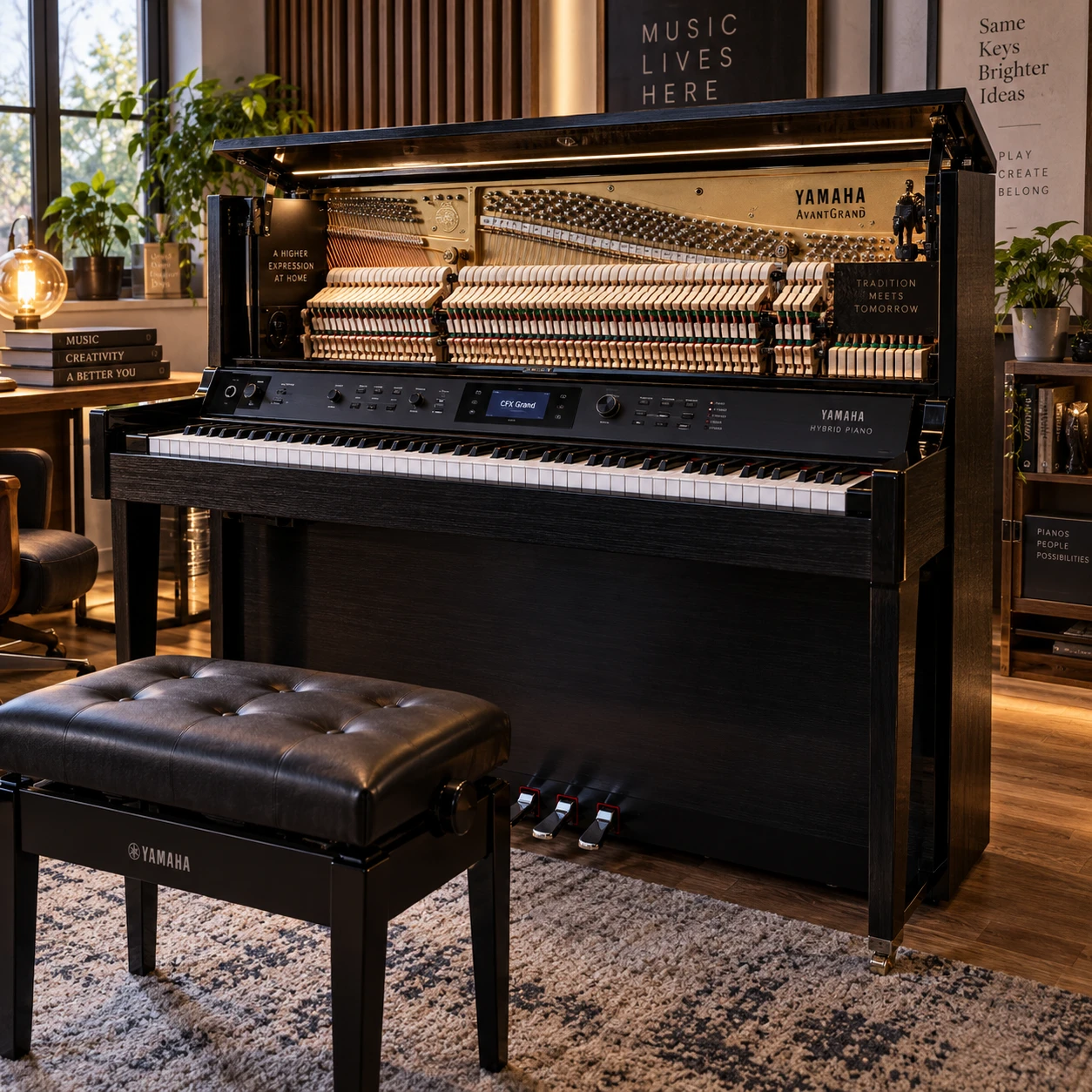
A hybrid piano brings together the responsive playing mechanism associated with an acoustic piano and the flexible sound features of a digital piano. For pianists who want a more substantial touch than many digital models provide, plus options such as headphone practice and adjustable volume, it offers a compelling middle ground.
The term covers instruments with different designs, though. Some use real piano action components; others add strings or a soundboard to shape the sound. Knowing what a specific model contains matters more than the word “hybrid” on its label.
What Is a Hybrid Piano?
A hybrid piano combines an acoustic-style playing action with digital sound generation, and some models also use acoustic components to help produce or shape that sound. The result aims to offer a familiar, expressive touch alongside controls and practice features associated with electronic instruments.
Unlike a conventional acoustic piano, a typical hybrid does not rely on strings struck by hammers to create its main sound. Sensors detect key and action movement, then a digital sound engine produces piano tones through speakers or headphones. Depending on the design, the instrument may include real hammers, an acoustic piano action, strings, or a soundboard.
That variety is why hybrid piano should be understood as a design category rather than one fixed blueprint. When comparing instruments, check how the keys move, what the sensors measure, and whether the sound comes entirely from piano samples or also involves physical acoustic parts.
How the Acoustic-Inspired Action Works
A hybrid piano uses keys, sensors, and an action designed to give the player a more piano-like response than a basic keyboard mechanism. The exact hammer mechanism differs by model, so the action should be tested in person when possible.
On an acoustic piano, pressing a key moves a linked mechanism that sends a hammer toward a string. The hammer does not stay against the string; it releases before impact, allowing the string to vibrate. A hybrid may use a similar action or selected acoustic components, while sensors track key movement and trigger the digital note.
That physical movement affects more than weight. The key’s travel, resistance, repetition, and return influence how easily a player can shape a phrase or repeat a note. Weighted keys alone do not guarantee an acoustic feel; action geometry and calibration also matter. Some models are designed to reproduce a grand-piano action, while others take a different approach.
Try slow passages, repeated notes, and soft playing across the keyboard. Listen for consistent response from low to high notes, and notice whether the keys feel controlled rather than simply heavy. A more substantial action can be rewarding, but it may feel tiring to someone accustomed to a lighter digital keyboard.
Where the Sound Comes From
Most hybrid pianos create their sound with a digital sound engine that plays recorded piano samples or synthesized tones through speakers or headphones. Some models add strings or a soundboard, using those acoustic components to influence resonance and projection.
In a sample-based instrument, recordings of an acoustic piano are mapped across the keyboard and played back in response to the keys. More advanced digital systems may use multiple recordings at different playing strengths, along with modeling that responds to touch and sustain. The quality of the piano samples, speakers, and sound processing all affect the result.
Acoustic elements can add another layer. A design with strings may let them resonate in sympathy with played notes, while a soundboard can help distribute sound through the cabinet. These parts do not make every hybrid behave exactly like a traditional acoustic piano; they are components in a particular instrument’s sound system.
Listen at both low and performance volume. A tone that sounds convincing through headphones may feel different through built-in speakers in a room. Check whether the instrument offers several piano voices, adjustments for brightness or ambience, and a clear way to control volume.
Hybrid vs. Acoustic vs. Digital Pianos
The main difference is that an acoustic piano makes sound mechanically, a digital piano generates it electronically, and a hybrid combines digital sound with an acoustic-inspired action or other acoustic parts. Which is preferable depends on touch, sound, maintenance, space, and practice needs.
- Feel: Acoustic pianos have a full mechanical action. Hybrids can offer comparable action components, though designs vary. Digital pianos range from light keybeds to sophisticated weighted actions.
- Sound: Acoustic sound comes from strings and the instrument’s body. Digital and many hybrid models use recorded or modeled tones, played through speakers or headphones. Certain hybrids also use acoustic components to shape resonance.
- Maintenance: Acoustic pianos need periodic tuning and may require regulation or voicing. Digital pianos do not need tuning. Hybrids generally avoid string tuning if their sound is digital, but the action and electronics still need appropriate care.
- Volume and practice: Acoustic pianos have no headphone mode and their sound cannot be reduced electronically. Digital pianos and most hybrids allow headphone practice and adjustable volume.
- Space and cost: Cabinet size and price vary widely. A hybrid with a substantial action may take up space and cost more than a portable digital piano; a full acoustic piano brings its own footprint and moving considerations.
In practical terms, a hybrid often suits someone who values a substantial action but needs electronic sound control. A digital piano may be the more sensible choice when portability, a smaller budget, or lighter weight matters most. An acoustic piano remains distinctive for players who want its fully mechanical sound and response.
The Benefits—and Trade-Offs—of Going Hybrid
Hybrid pianos offer a combination of expressive action and digital convenience, especially for players who want headphone practice without giving up a more substantial key mechanism. The trade-off is that the benefits, price, and acoustic resemblance depend heavily on the model.
Headphone practice can make regular playing easier in shared homes or at night, while volume control helps the instrument fit different rooms and situations. Many models also provide several sounds, recording or connectivity options, and less routine tuning than an acoustic piano. For a developing player, a responsive action can support careful work on dynamics and technique.
There are limits. A hybrid’s action may feel different from the acoustic piano it is meant to evoke, and its speakers may not reproduce the room-filling character of a large acoustic instrument. Some players may also prefer the sound and direct mechanical feedback of strings. The substantial cabinet and mechanism can cost more than a portable digital piano, without delivering every quality of an acoustic grand.
A common buying mistake is assuming the category guarantees a particular action or sound. It does not. Compare the manufacturer’s description with the actual mechanism, and play the instrument rather than choosing on specifications alone. Another mistake is judging tone only through headphones; listen through the built-in speakers at the volume you expect to use at home.
Who Should Consider a Hybrid Piano?
A hybrid piano is worth considering for pianists who want an acoustic-inspired touch with digital features such as headphone practice and volume control. It can be a strong fit for home practice, but it is not automatically the right choice for every player or room.
Consider one if you:
- Want a substantial, piano-like action but cannot play loudly at all hours.
- Are moving from an acoustic piano and want an electronic instrument with a more familiar mechanism.
- Need a permanent home instrument with digital sounds or connections, rather than a lightweight keyboard for travel.
- Share a home where adjustable volume or headphone use makes regular practice more practical.
A hybrid may be less suitable if you need an inexpensive, portable instrument, prefer a light keybed, or specifically want the sound of strings and a fully acoustic piano. Before deciding, weigh how often you will use headphones against how much you value acoustic sound and touch. That simple test can clarify whether the hybrid compromise is useful for your routine.
What to Check Before Choosing One
Before choosing a hybrid piano, test its action, compare its sound through speakers and headphones, and confirm its dimensions, connections, and features suit your room and routine. Specifications help narrow the list, but playing the instrument is the most reliable way to judge its response.
- Action: Play softly, loudly, and at different speeds. Test repeated notes, key return, and consistency across the keyboard.
- Sound: Try the main piano voices at low and higher volume. Listen through the built-in speakers and headphones if available.
- Practice features: Confirm headphone connections, volume control, and any recording or learning tools you expect to use.
- Connectivity: Check for the specific USB, MIDI, or audio connections required by your computer, recording setup, or other equipment.
- Dimensions and placement: Measure the instrument and the route into your home. Consider speaker placement, seating, and access to power.
- Support and care: Ask about warranty coverage, service availability, and whether the model’s action or acoustic components need periodic attention.
Do not choose by key count, sound library, or action description in isolation. A useful decision comes from matching the instrument’s actual feel and sound to your playing habits, space, and budget.
Frequently Asked Questions
Does a hybrid piano feel like an acoustic piano? It can feel closer than many digital pianos, especially when it uses a full acoustic piano action. The feel still varies by model and will not reproduce every acoustic instrument’s response.
Can you play a hybrid piano with headphones? Most digital-sound hybrid pianos support headphone practice. Check the individual model’s connections and whether its speakers mute automatically when headphones are plugged in.
Does a hybrid piano need tuning? A hybrid that generates its sound digitally does not need string tuning. If it includes acoustic strings or other mechanical components, ask the manufacturer or dealer what maintenance applies to that design.
Is a hybrid piano better than a digital piano? Neither is universally better. A hybrid may suit players who prioritize an acoustic-inspired action, while a digital piano can be more affordable, portable, and compact.